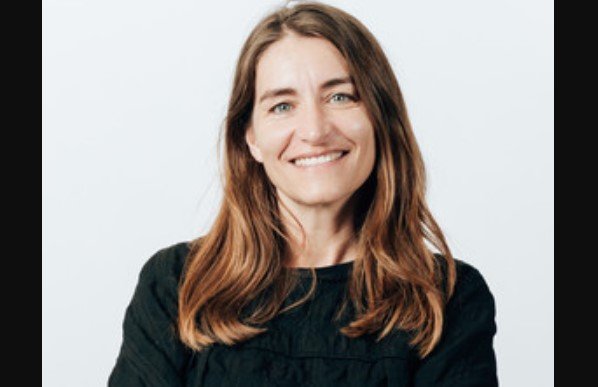

The architectural and academic communities are mourning the loss of Heather Roberge, a distinguished architect, educator, and innovator whose pioneering work and inspiring leadership left an indelible mark on the fields of architecture and design. Based in Los Angeles, Heather’s sudden passing has deeply saddened colleagues, students, and admirers worldwide, as they reflect on her extraordinary contributions to shaping the future of building and design.
Heather Roberge was a trailblazer in her profession, serving as the founder and principal of her design practice, Murmur, which was renowned for exploring the spatial, structural, and atmospheric potential enabled by digital technologies. Her innovative approach to architecture challenged conventions and expanded the boundaries of materiality, computation, and manufacturing. Her work emphasized the importance of integrating emerging technologies into the design process to explore new formal vocabularies and spatial possibilities, especially in building envelopes and assemblies.
Alongside her professional practice, Heather was a dedicated educator at UCLA’s Architecture and Urban Design department, where she served as a professor and played a vital role in mentoring the next generation of architects. Her teaching was characterized by a forward-thinking approach that encouraged students to experiment with materials, digital fabrication, and computational design—pushing the limits of traditional architectural thinking. Her emphasis on innovation inspired countless students and colleagues alike.
From 2017 to 2020, Heather served as the Chair of UCLA Architecture and Urban Design, guiding the department through a period of growth and transformation. She also directed the undergraduate program, fostering a dynamic learning environment that valued creativity, critical thinking, and technological advancement. Her leadership was instrumental in elevating UCLA’s reputation in the architectural world, and her influence extended far beyond her immediate community.
Throughout her career, Heather received numerous accolades recognizing her distinctive and impactful work. She was honored as the 2026 AIA-LA Educator of the Year and received the 2017 ACADIA Teaching Award of Excellence. Her innovative designs earned her the 2016 Emerging Voices Award from the Architectural League of New York—a prestigious recognition of her creative vision. Other notable awards include the 2015 AIA LA Merit Award for “En Pointe,” an installation at SCI-Arc Gallery, and the 2011 AIA Next LA Design Merit Award for her “Succulent House,” a project that showcased her ability to blend nature-inspired forms with architectural innovation. She was also a finalist in the 2006 PS1/MoMA Young Architects Program, highlighting her early promise as a rising star in architecture.
Heather’s work was widely published and exhibited, featured in prominent publications such as *A+U*, *Wallpaper*, *Architectural Record*, *Log*, *Architects Newspaper*, *The New York Times*, and *The Los Angeles Times*. Her designs and ideas were showcased in group exhibitions across the United States and internationally, inspiring architects and designers worldwide.
Her professional training was equally impressive, having worked with some of the most influential architecture firms in New York, including Eisenman Architects, Architecture Research Office, and Davis Brody Bond. Her academic journey included teaching positions at the University of Virginia, Yale University, Oregon State University, Washington University in St. Louis, Rensselaer Polytechnic Institute, and Pratt Institute—each role further cementing her reputation as a passionate educator committed to pushing the boundaries of architectural thought and practice.
Heather Roberge’s passing leaves a profound void in the architectural community. Her legacy is one of relentless innovation, mentorship, and a dedication to advancing the way we conceive, design, and build. She was a visionary whose work challenged norms and inspired generations to think creatively and critically about the built environment.